Nearshoring instead of long-distance trading? How goods flows are realigning in 2026
Global supply chains remain under pressure to adapt. Geopolitical tensions, volatile freight rates, trade barriers and increasing sustainability requirements are changing the strategic decisions of many industrial and commercial companies. One development is increasingly coming into focus: nearshoring — i.e. the relocation of production or procurement locations closer to sales markets.
But does this really mean the end of global flows of goods? Or is it rather a readjustment of existing networks?
Why long-distance trading is losing its appeal
For decades, offshoring — particularly to Asia — was regarded as a driver of efficiency. Low production costs and established sea freight routes enabled predictable supply chains. However, since the disruptions of recent years, it has become clear how dependent companies are on stable political, infrastructural and logistical conditions.
Long transit times across sea, bottlenecks in ports, container availability and regulatory uncertainties increase the risk. In addition, there is growing pressure to make supply chains more transparent and sustainable. Long transport distances have a direct impact on CO₂ balances — a factor that is increasingly being taken into account in procurement decisions.
Nearshoring: Shorter routes, new challenges
In practice, nearshoring often means shifting production capacities to Eastern Europe, Turkey or North Africa. For European companies, these regions offer geographical proximity, comparatively competitive cost structures and shorter delivery times.
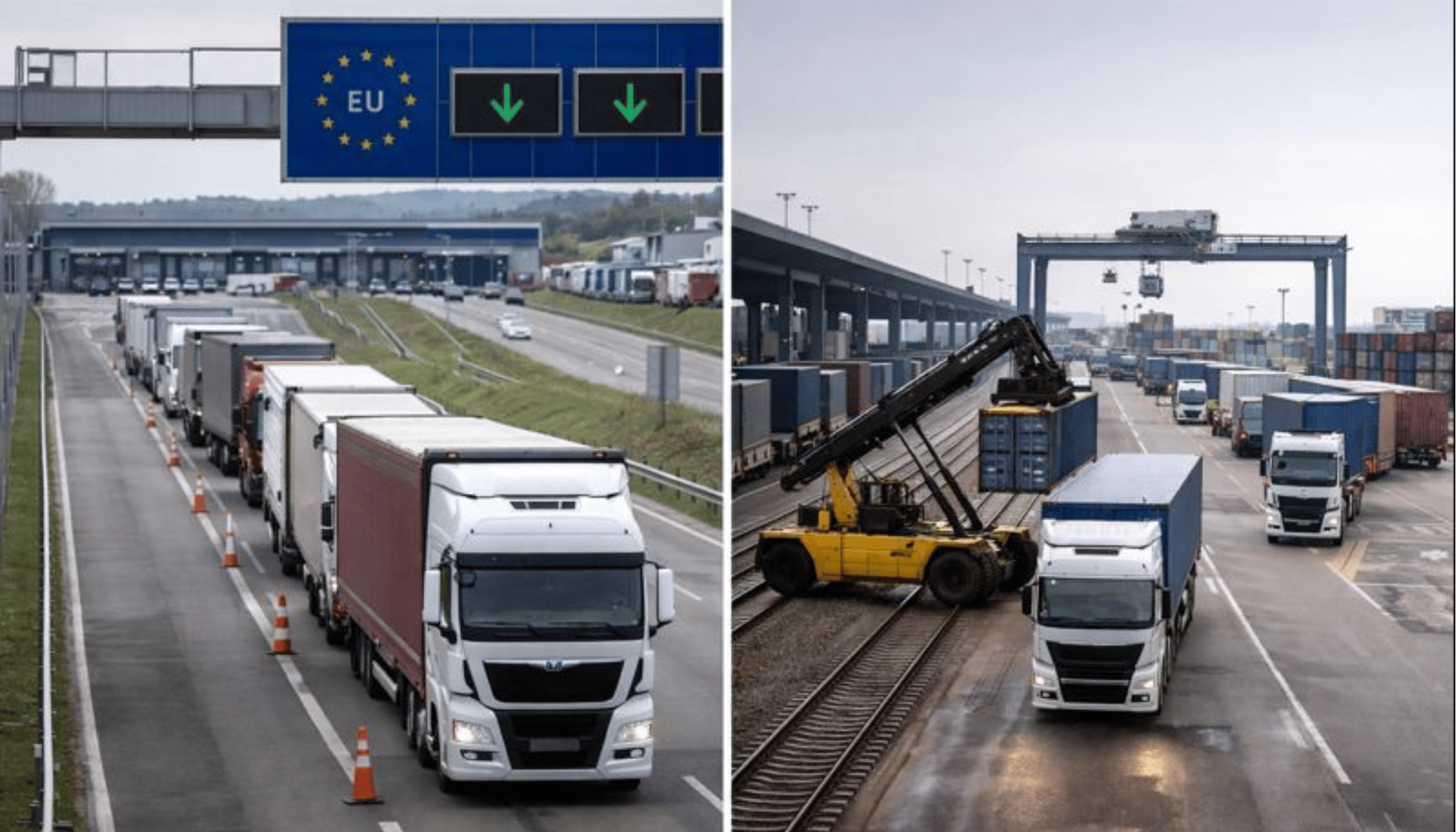
Logistically, this significantly changes the transport profile. Sea freight is partly being replaced by road freight or combined transport. Transit times are reduced, the ability to react increases. At the same time, there are new requirements for border processes, customs processing and infrastructure.
Not every region has the same transportation and storage infrastructure as established long-distance trade centers. Road quality, terminal capacities and political stability play a central role. Nearshoring reduces distance — but does not replace the need for professional planning.
Multimodality is gaining in importance
With the shift in the flow of goods, the role of modes of transport is also changing. While transcontinental supply chains are heavily geared towards ocean freight, multi-modal concepts are gaining in importance when it comes to nearshoring. Combinations of road and rail or short-sea transport in the Mediterranean region provide flexible and comparatively fast solutions.
Transport speed is becoming a strategic factor, particularly in the automotive or mechanical engineering sector, where just-in-time and just-in-sequence processes dominate. Shorter routes mean lower safety stocks — provided that the transport chains are stable and transparent.
A balance between costs, risk and sustainability
Nearshoring is often presented as a more sustainable alternative to long-distance trading. In fact, shorter transport distances can reduce emissions. At the same time, production costs in nearby regions are often higher than in traditional offshoring markets. Companies must therefore carefully consider: What are the total costs, taking into account risk, inventory, transport and regulatory requirements?
Another aspect is diversification. Many companies do not rely exclusively on nearshoring, but combine regional and global procurement models. These “China-plus-one” or “dual-sourcing” strategies increase resilience, but require more complex logistics management.
Infrastructure as a limiting factor
The increasing shift of goods flows towards the European periphery presents infrastructure operators with new challenges. Border crossings, rail terminals and road networks must be able to absorb increasing volumes. Otherwise, bottlenecks can quickly lead to new delays — this time not on the high seas, but by land.
This shows that geographical proximity alone does not guarantee a stable supply chain. The decisive factor is how well transport capacities, customs processes and digital interfaces are coordinated.


Nearshoring changes transport profiles, but does not replace the need for robust logistics structures. Shorter routes increase flexibility, but it is only through coordinated infrastructure, multimodal concepts and transparent processes that truly resilient supply chains can be created.