When machines start a second life
Part 4 of the blog series: When a factory goes on a trip
After weeks of planning, dismantling and organization, the project is reaching its final phase: international shipping. The containers have been loaded, the transport chain is complete and the first units set off on their journey by sea.
What was previously a disused industrial site is now becoming part of a new value chain.
Resolution: What is behind the project
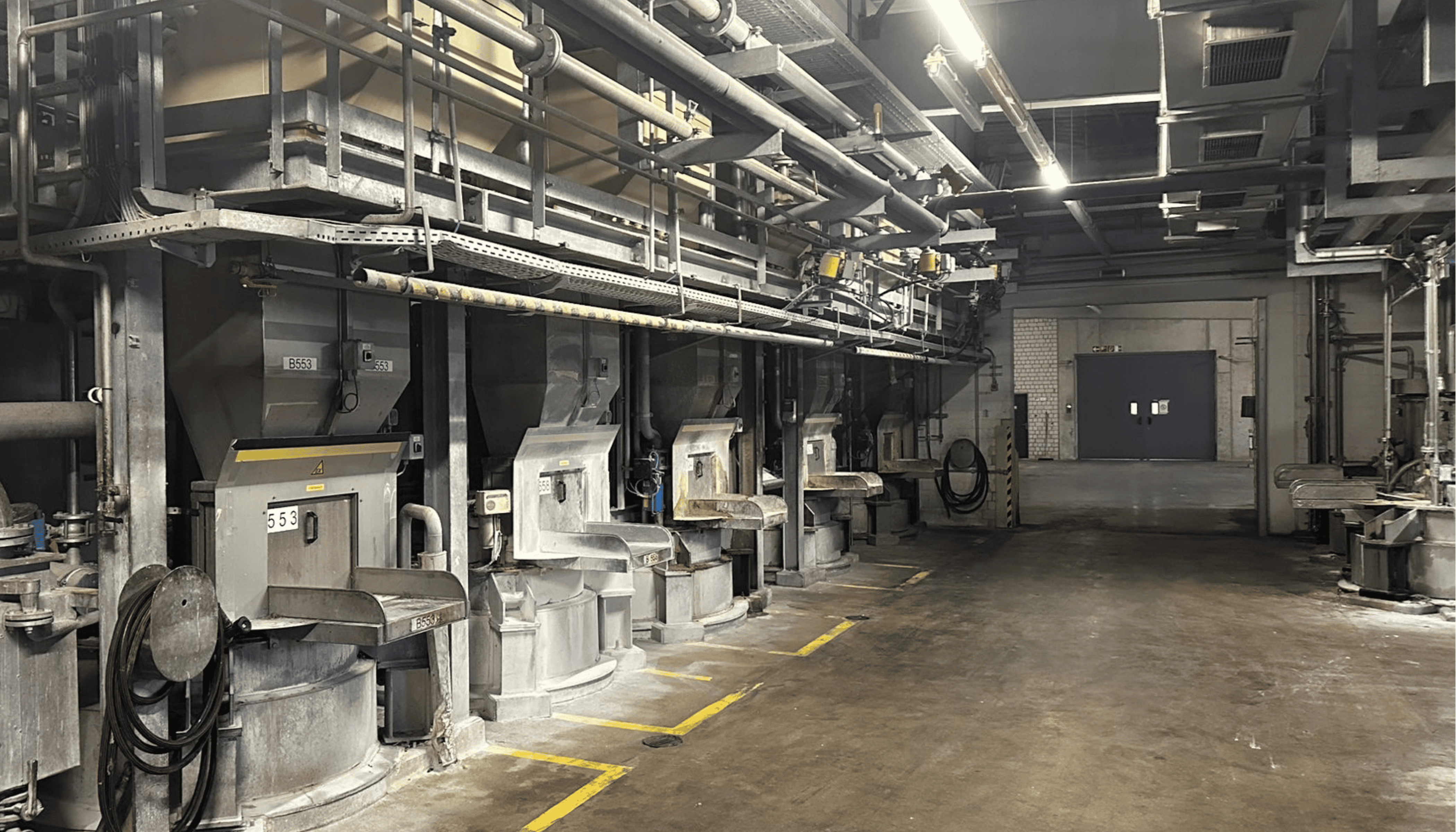
The plant is a former plant of paper manufacturer Mitsubishi Paper, which was known, among other things, under the name Fjord Paper. After closure, the site became part of the bankruptcy estate. Instead of completely scrapping the plants, it was decided to dismantle large parts of production and rebuild them at a new location.
The machines start their journey from Germany to Egypt — with the aim of being put into operation again there.
Industry on the move
This project shows how flexible industrial value creation has become today. Production plants are no longer tied to a fixed location. They can:
- be shut down
- be dismantled
- be transported internationally
- Continue running at a new location
What used to mean the end of a plant is now often just a transition.
The role of logistics
For FR8 Logistik GmbH, this project is an example of the possibilities of modern project logistics.
From initial planning to shipment, a wide variety of requirements were brought together:
- Dismantling complex systems
- Organization of container logistics
- coordination of transport chains
- Coordination between plant, port and international partners
A project that is also perceived as exceptional internally in this form.


A particular challenge
Transporting individual machines is part of everyday life in the industry — but relocating an entire factory is another dimension.
“We have never had a project like this before,” says Jan Kristian Langfeldt, owner and managing director of FR8 Logistik GmbH.
“That is precisely why it is an exciting task for the entire team. ”
More than just transportation
In the end, it's not just about logistics, but about transformation. Machines that have been taken out of service at one location are given a new function elsewhere. Resources continue to be used and industrial structures are being rebuilt. Logistics is the bridge between past and future.
conclusion
In the end, this project is more than just transporting an industrial plant. It shows what logistics must do today: not just move, but also understand, plan, coordinate — and take responsibility. For us as FR8 Logistik GmbH, this project was special in many ways. Relocating an entire factory of this scale and complexity is not part of everyday life — not even for us. That is exactly what makes it so appealing. These are projects where there is no standard solution, where many participants come together and where every decision has an impact on the further course of events. What this project shows above all is that success does not come from individual steps, but through the combination of experience, planning and a strong team.

Logistics not only enables goods to be transported, but also the continuation of industrial value creation. Projects like this show that systems don't have to end — but can start again somewhere else.