
What to do in the event of cargo damage in sea freight?
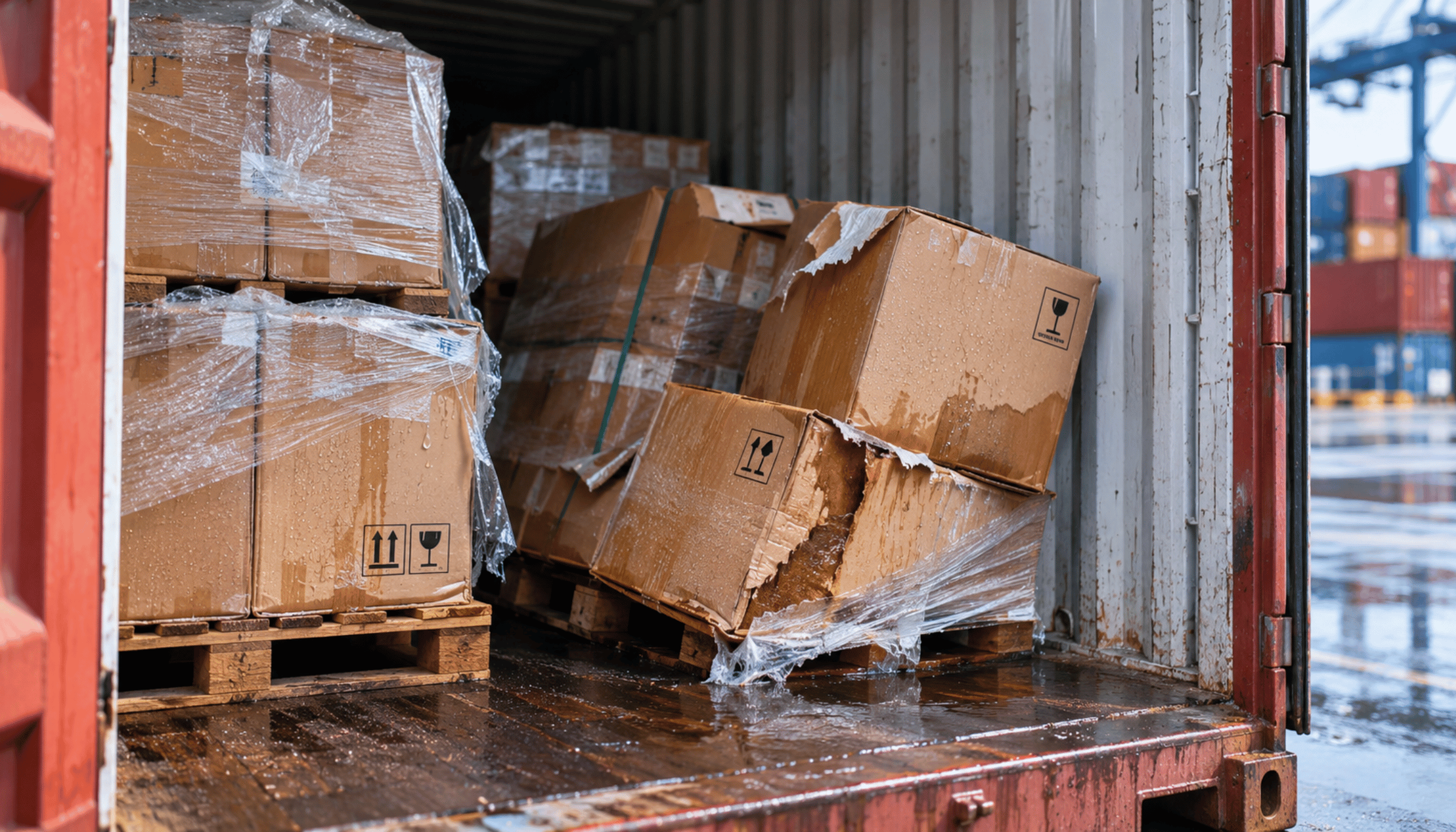
The container reaches its destination, the doors are opened—and suddenly it’s clear: boxes are soaked, pallets have shifted, or goods are damaged. Cargo damage is one of the risks of international sea freight. But who is liable, what should you do in the event of damage, and how can such situations be avoided?
Containers spend weeks at sea. During this time, the cargo is subjected to various stresses: ship movement, temperature fluctuations, humidity, and mechanical forces during handling. Most shipments go smoothly. However, if damage does occur, resolving the issue can be complex.
What makes it particularly difficult is that not all damage is visible from the outside. A container can appear undamaged and properly sealed while, inside, goods have already shifted or moisture has penetrated.
How does cargo damage occur in containers?
The causes can vary significantly. Typical risks include:
- Inadequate cargo securing: If pallets or heavy items shift during the sea voyage, goods can be damaged. Significant forces act on the cargo, especially in heavy seas.
- Humidity and condensation: Temperature changes can lead to the formation of condensation. This so-called "container rain" can soak packaging, cause corrosion, or promote mold growth.
- Unsuitable packaging: Packaging that is sufficient for short road transport is not necessarily suitable for sea voyages lasting several weeks.
- Handling damage: During loading and unloading, containers and goods can be damaged due to improper handling or technical incidents.
- Leaky containers: Damaged door seals, walls, or roof sections can allow water to enter.
Damage is often only discovered during unloading at the destination. By then, the actual time the damage occurred may have been weeks ago.
Damage discovered – what now?
When cargo is damaged, a quick and careful response is essential. The better the condition of the goods is documented, the easier it is to reconstruct the facts later.
1. Document the damage
Damage should be photographed as soon as possible—ideally before unloading is completed. It is important to take pictures of the container, the cargo distribution, the packaging, and the affected goods. Container and seal numbers should also be recorded.
2. Note reservations upon receipt of goods
Visible damage should be noted specifically on the delivery documents or reported to the responsible carrier no later than the time of delivery. Accepting goods without reservation can make it more difficult to provide evidence later.
3. Inform all parties immediately
The freight forwarder, carrier, and, if applicable, the transport insurer should be notified as soon as possible. Depending on the transport contract and applicable law, different deadlines apply to hidden damage.
Under German law, the notification period for damage that is not externally visible is generally seven days under general freight law (Section 438 of the German Commercial Code/HGB), while it is three days under maritime law (Section 510 HGB). For international shipments, other regulations may apply. Therefore, you should always report the damage immediately.
4. Secure the goods and prevent further damage
If possible, damaged packaging and cargo securing materials should be kept for later inspection. At the same time, reasonable measures must be taken to prevent further damage.
Who is liable for damaged goods?
There is no simple answer to the question of liability. International container transport often involves multiple parties: the shipper, freight forwarder, shipping line, terminal operator, and transport company.
The deciding factor is when and how the damage occurred and who was responsible for that specific leg of the transport.
If, for example, the goods were inadequately packed or secured by the shipper, the responsibility may lie there. If the damage occurs while in the custody of a carrier, their contractual and legal liability regulations apply.
However, liability is often limited to specific amounts. Furthermore, depending on the cause of the damage and the legal situation, liability exclusions may apply.
The agreed-upon Incoterms also play a role. Among other things, they regulate when the risk of accidental loss or damage transfers from the seller to the buyer. However, they do not automatically determine which transport service provider is liable for damage.
Cargo insurance: Why liability alone is often not enough
A common misconception is that the liability of a shipping line or freight forwarder automatically covers the full value of the goods.
In reality, legal and contractual liability limits can result in only a portion of the damage being covered. Additionally, enforcing claims can be difficult if the cause cannot be clearly determined.
Cargo insurance can reduce such financial risks. Depending on the agreed coverage, this can include protection against specific types of damage, moisture damage, or the total loss of a shipment.
However, not every type of damage is automatically covered. For example, inadequate packaging or certain material-related defects may be excluded from insurance coverage.
Companies should therefore verify which risks their insurance actually covers before shipping.
How can cargo damage be prevented?
Transport damage cannot be completely ruled out. However, with careful preparation, companies can significantly reduce the risk.
Appropriate packaging, professional cargo securing, and correct weight distribution within the container are particularly important. Goods must be stowed in such a way that they can withstand the stresses encountered throughout the entire transport chain.
For moisture-sensitive goods, additional protective packaging, desiccants, and an inspection of the container's condition can be beneficial.
The international provides important guidance. CTU CodeIt contains recommendations for the safe packing and securing of containers and other transport units.
Coordination between the companies involved is equally important. Clear responsibilities and transparent documentation make it easier to identify potential risks early and respond quickly in the event of damage.
As an internationally active ocean freight forwarder based in Hamburg, FR8 Logistik GmbH coordinates shipments across various modes of transport. Especially in cases of cargo damage, cooperation between shippers, shipping lines, transport partners, and recipients is crucial for resolving the situation quickly.

Cargo damage in sea freight can result from inadequate securing, moisture, unsuitable packaging, or incidents during handling. If damage is discovered, immediate documentation, timely notification of the damage, and informing all involved parties are essential. Who is ultimately liable depends on the cause of the damage, contractual agreements, and the applicable law. Since the liability of transport service providers is often limited, a suitable cargo insurance policy can be a wise investment. However, the best prevention remains professional packaging, secure cargo loading, and careful transport planning.