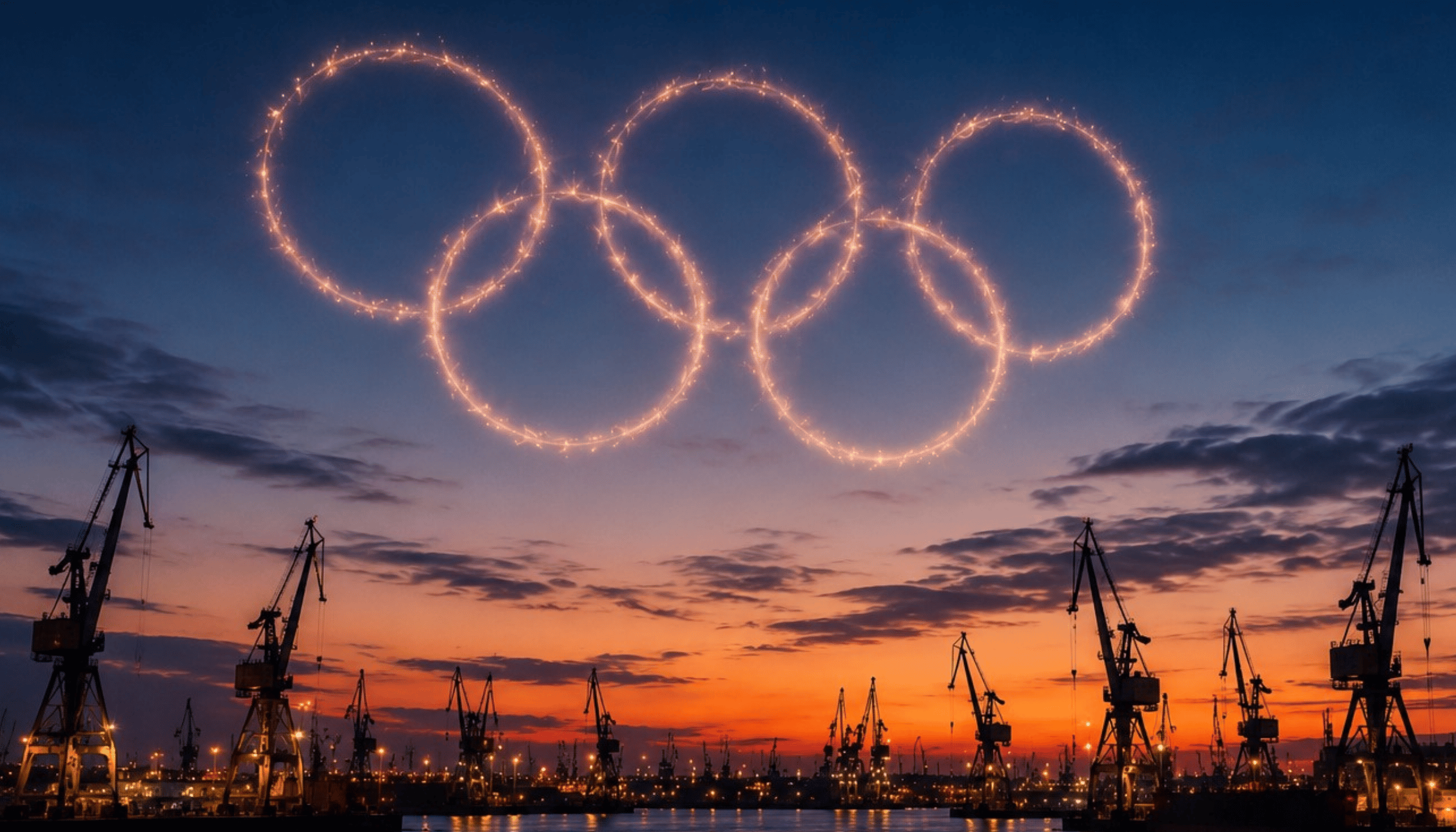
Hamburg 2040: Opportunity for infrastructure, economy and the city?
Olympic Games are polarizing. Some see billions in costs, major construction sites and a gigantic prestigious project. The others see an opportunity to modernize a city in the long term and reposition it internationally. And perhaps that is exactly the crux of the discussion.
Because Hamburg's possible Olympic bid is by no means just about sport. It is about infrastructure, mobility, urban development, international visibility and the question of how modern cities should function in the future. Hamburg in particular could have enormous potential in this regard.
Why the Olympics could be a real opportunity for Hamburg
Hamburg is already one of Europe's most important economic and port locations. The city combines industry, logistics, tourism, science and international business in a confined space. The Olympic Games would make Hamburg even more visible worldwide — not just as a venue for a sporting event, but as a modern European metropolis.
And that is exactly what could have long-term effects on:
- international investments
- Business settlements
- tourism
- Recruiting skilled workers
- infrastructure development
- City marketing
Major international events attract attention. And attention can accelerate development.
Infrastructure: Many projects would be necessary anyway
A crucial point in the discussion: Many investments that are being discussed today would have to be implemented sooner or later anyway. Hamburg has been struggling with various infrastructural challenges for years:
- Roads in need of renovation
- Traffic bottlenecks
- congested roads
- The need for modernization of railways and bridges
- better connections to individual districts
- Expansion of rail and public transport
- more sustainable mobility concepts
The Olympic Games could accelerate precisely these issues. Because major international projects often have a decisive effect: planning, approvals and investments are suddenly given priority.
What normally takes many years is implemented much faster. And not only visitors would benefit from this — but above all the people who live in Hamburg in the long term.
Olympics as an engine for modern urban development
Olympic projects in the past were often criticized for thinking in the short term and creating gigantic new buildings that were barely used later. But modern concepts have changed.
Today, there are topics such as:
- sustainability
- reuse
- climate-friendly mobility
- use of existing infrastructure
- compact event spaces
- urban development
much more focused.
Hamburg would have the opportunity to develop a modern Olympic model: compact, sustainable and intelligently integrated. The combination of water, port, urban areas and existing infrastructure in particular could create a strong international image.
Positive examples from the past
Barcelona 1992 — Olympics as a turning point
Barcelona is still considered one of the most successful Olympic examples of all. The city used the games specifically for:
- new traffic routes
- Modernizing infrastructure
- Development of coastal areas
- international positioning
Before the Olympics, Barcelona had significantly less international presence than it is today. The games became the trigger for long-term urban development there. The result is still visible today.
London 2012 — sustainable reuse
London showed that the Olympics don't just have to be a short-term splendor. Many former Olympic venues later became:
- to living space
- to parks
- to office and leisure spaces
- to public sports facilities
East London in particular benefited from investments in the long term. The games were used to redevelop entire areas of the city.
Paris 2024 — new Olympic thinking
Paris is currently consciously pursuing a more sustainable approach. The focus is on:
- use of existing infrastructure
- fewer new buildings
- sustainable mobility
- more compact games
- climate-friendly planning
Exactly this model could also be of interest to Hamburg.
Of course, there is also criticism
And this criticism is important and justified. Olympic Games cost money. And many projects have been significantly more expensive in the past than originally planned.
Critics fear:
- Billions in charges
- long-term follow-up costs
- rising prices
- Construction sites and traffic problems
- Prestigious projects without sustainable benefits
These concerns should be taken seriously.
The decisive question is therefore not: whether investments are made, but: How wisely they invest! Because when infrastructure is planned for the long term, cities often benefit for decades. If, on the other hand, short-term splendor becomes more important than sustainable use, projects are created without real added value.
Hamburg would have special requirements
Hamburg has many requirements that could be interesting for modern games:
- compact urban structure
- strong international connection
- existing infrastructure
- Waterfront and port location
- tourist attractiveness
- Experience with major events
In addition, the city already has many areas and venues that could be integrated. This reduces the need for gigantic new buildings.
More than just a sporting event
Maybe the Olympics aren't the real topic at all in the end. Perhaps it is more about the question: What should Hamburg look like in the future? Because there are many challenges independent of the Olympics:
- modern mobility
- sustainable infrastructure
- More livable urban development
- international competitiveness
The Olympics could be a catalyst for this. An opportunity to implement projects faster and more consistently.
The real opportunity
The biggest opportunity may not lie in the event itself, but in what could be initiated as a result. If long-term thinking is taken, the Olympic Games could:
- Speed up investments
- Modernize infrastructure
- Upgrade districts
- Strengthening Hamburg internationally
- promote sustainable development
And that is precisely why the discussion is currently being conducted more intensively again.
conclusion
An Olympic bid would definitely be ambitious for Hamburg. But at the same time, it could be exactly the impetus that many infrastructure and urban development projects have needed for years.
There are risks, of course. Of course, such a project costs money. But international examples also show that if long-term and sustainable planning is carried out, the Olympic Games can leave behind much more than medals and memories. Namely, a more modern city for future generations.
📌 Note for all Hamburgers: The current survey on the possible Olympic bid is only running until May 31, 2026. If you want to have a say, you should find out more and take part now.


The discussion about the 2040 Olympics is ultimately more than a debate about sports or a major event. It shows how closely topics such as infrastructure, mobility, urban development and international competitiveness are interlinked. For Hamburg, an Olympic bid could be a real opportunity to move forward faster on projects that have long been necessary anyway. At the same time, it will be decisive whether long-term and sustainable planning is carried out — or only in the short term for a single event.