Refrigerated Containers from Asia: What You Need to Know When Importing Temperature-Controlled Goods
Reefer Containers from Asia: What You Need to Know When Importing Temperature-Controlled Goods
A reefer container is a temperature-controlled refrigerated container for transporting temperature-sensitive goods. FR8 offers reefer containers in 20-foot (20'RF) and 40-foot (40'RF) sizes for imports from Asia. The temperature can be set from minus 30 degrees to plus 30 degrees Celsius, depending on the goods. Key factors for a successful refrigerated import include the correct container size, a passed pre-trip inspection, and sufficient booking lead time.
Importers of temperature-sensitive goods from Asia cannot afford any errors in the cold chain. A temperature deviation of just a few degrees over several hours can render an entire shipment unusable. Food spoils, pharmaceuticals lose their approval, and chemicals change their properties. The reefer container is the technical solution to this requirement, but it alone does not guarantee safe transport.
This article explains how reefer containers work, what goods they transport, what sizes are available, and what importers need to pay particular attention to when importing refrigerated goods from Asia.
What is a Reefer Container and How Does It Work?
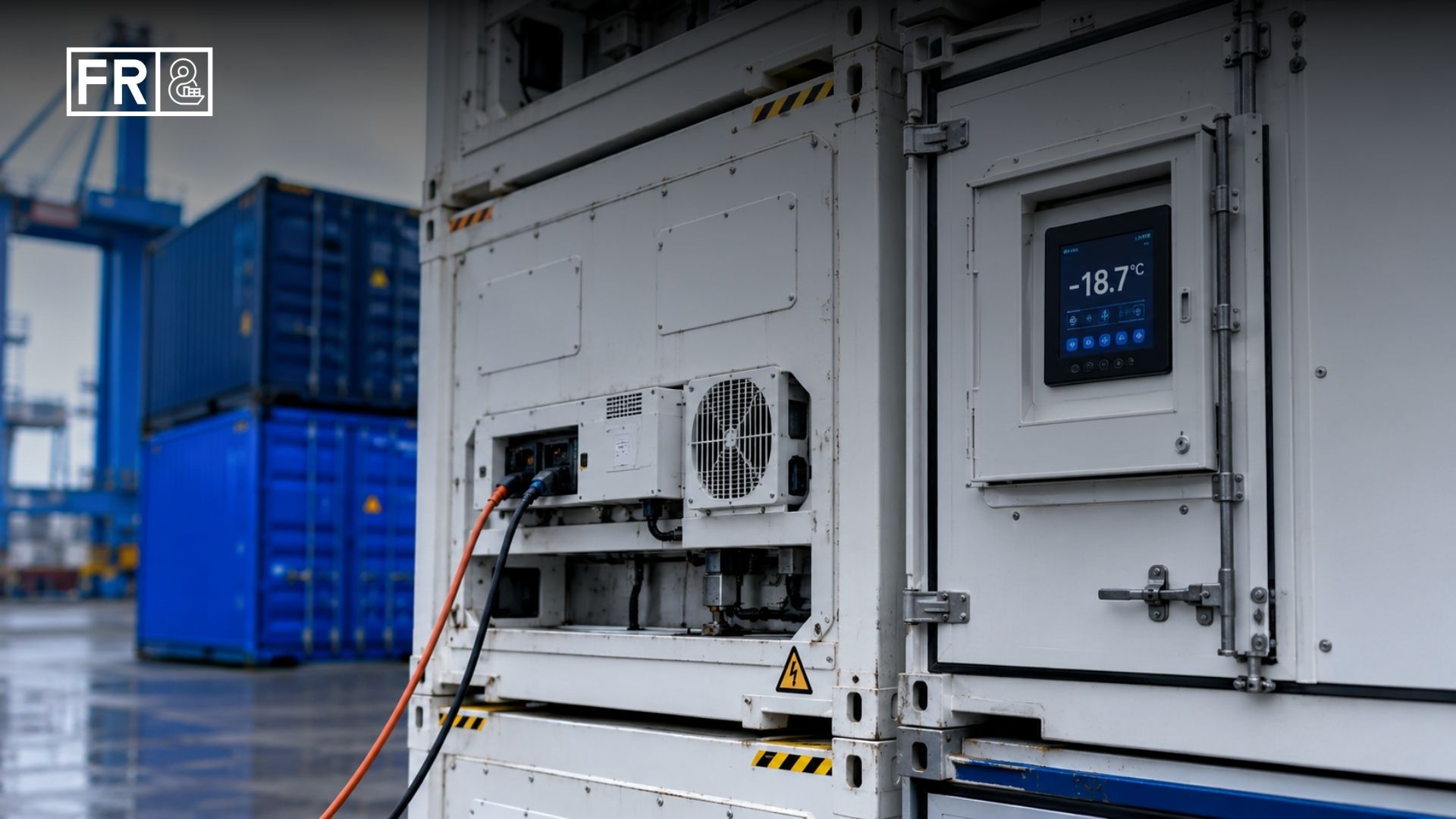
A reefer container, short for refrigerated container, is a sea freight container with an integrated refrigeration unit. Its external dimensions match those of a standard container, allowing it to seamlessly integrate into the intermodal transport chain of ship, rail, and truck. Inside, a refrigeration unit combined with an air circulation system ensures that the set temperature is maintained constantly throughout the entire journey.
The temperature can be precisely set depending on the goods, from constant positive temperatures for fresh produce to minus 30 degrees Celsius for frozen goods. Some reefer models also feature a heating function, as in certain cases, cargo needs to be warmed at low outside temperatures to prevent frost damage.
During sea voyages, power is supplied via the cargo ship's onboard network; in port, via the local power grid; and during road transport, via mobile generators, known as gensets. We explain how the global cold chain works in technical detail in our article on reefer container cold chain logistics.
What Goods Are Transported in Reefer Containers?
Reefer containers transport a wide range of temperature-sensitive goods. The following product categories are particularly relevant for imports from Asia to Germany:
- Food: Frozen fish and seafood, fruits and vegetables, processed foods, and specialty products in demand in Europe
- Pharmaceuticals and Active Ingredients: Medicines, vaccines, and active pharmaceutical ingredients (APIs) that are sensitive to temperature fluctuations. India and China are significant production sites for generics and APIs.
- Chemical Products: Temperature-sensitive chemicals, adhesives, and certain raw materials that must remain within a defined temperature range.
- Cosmetics and Special Products: Goods that lose their consistency or effectiveness in heat or frost
Each of these product groups has its own requirements for temperature, humidity, and documentation. Especially for foodstuffs of animal origin and pharmaceuticals, strict import and proof requirements apply, which must be clarified even before loading in Asia.


20'RF or 40'RF: Which size for which shipment?
Reefer containers are essentially available in two sizes. The right one depends on the volume, weight, and type of your goods.
An important difference from standard containers: With reefers, the insulation and cooling technology slightly reduce the usable internal volume. Therefore, planning should not only consider the theoretical container volume but also the actual usable loading volume. FR8 Logistik GmbH advises you on choosing the appropriate size for your specific goods.
What importers must pay particular attention to when importing reefers
The reefer container is only as reliable as the planning surrounding it. In practice, three points determine whether temperature-controlled goods arrive safely.
Pre-Trip Inspection (PTI)
Before each loading, the reefer container should undergo a Pre-Trip Inspection. During this technical pre-check, the refrigeration unit, sensors, air circulation, and seals are tested. A successful PTI is the basis for the container maintaining the required temperature throughout the entire sea voyage. If the PTI is skipped, the risk of a unit failure at sea increases significantly.
Booking Lead Time
Reefer capacity is scarcer than standard capacity. The number of reefer plugs on board a ship is limited, as each reefer requires a power connection. Those who book at short notice risk not getting reefer capacity on their desired sailing. A booking lead time of at least four weeks is recommended, longer during peak season.
Continuous Cold Chain
The cold chain must not be interrupted at any point, from loading in Asia, through the sea voyage and port handling in Hamburg, to onward transport by truck. The transitions between transport segments are particularly critical. Here, the power supply must be continuously ensured, otherwise temperature deviations are imminent.
Checklist before booking a reefer: Define target temperature and tolerance range, select container size based on volume and weight, ensure PTI, prepare documents according to goods type (veterinary certificates, temperature logs), plan for a booking lead time of at least four weeks, and clarify continuous power supply across all transport segments.
Added to this is the question of the Customs Clearance for Temperature-Controlled Goods. For food products of animal origin, veterinary controls and additional permits are often required, which can impact the process in Hamburg. These need to be planned well in advance to ensure the goods do not await release without refrigeration upon arrival.
FR8 Logistik GmbH and Temperature-Controlled Imports from Asia
FR8 Logistik GmbH is an internationally active sea freight forwarder based in Hamburg. As a member of the DSLV (German Freight Forwarding and Logistics Association) and the Association of Hamburg Freight Forwarders (VHSp), we operate according to the recognized quality standards of the German forwarding industry. In 2025, we completed 3,879 projects and loaded 16,388 TEU, including numerous temperature-controlled shipments.
For reefer imports from Asia, we coordinate the entire process: selecting the appropriate container size, ensuring the pre-trip inspection, booking scarce reefer capacity, and aligning documents according to the goods category. On the Asia route, we work with established agent partners in Shanghai, Hong Kong, and India, who supervise the loading on-site.
The reefer containers we work with are part of our sea freight services a continuously monitored transport process. Your dedicated contact person knows your shipment and will notify you of any deviations. If you are planning a temperature-controlled shipment from Asia, let us know your requirements and you will receive a detailed response within 24 hours.
Frequently Asked Questions about Reefer Imports from Asia
How early do I need to book a reefer container?
Reefer containers should be booked earlier than standard containers, as the number of reefer slots on board is limited. As a guideline, a booking lead time of at least four weeks applies, or even longer during peak season or for highly demanded routes. FR8 Logistik GmbH recommends registering your reefer capacity needs as early as possible to secure your desired departure and correct temperature settings.
What is a PTI (Pre-Trip Inspection) for a reefer container?
A Pre-Trip Inspection (PTI) is the technical pre-check of a reefer container before loading. During this, the refrigeration unit, sensors, air circulation, and seals are tested to ensure that the container can maintain the required temperature throughout the entire sea voyage. A successful PTI is the basis for the safe transport of temperature-sensitive goods. FR8 Logistik GmbH ensures that only inspected reefer containers are used.
What happens if a reefer container fails at sea?
Modern reefer containers are powered by the ship's onboard electrical system and continuously monitored during the sea voyage. If a unit fails, the onboard monitoring system raises an alarm, and the ship's crew can intervene. Continuous temperature monitoring and a successful Pre-Trip Inspection before departure significantly reduce the risk of failure. FR8 Logistik GmbH works with shipping lines that have appropriate monitoring systems.
What documents are required for temperature-controlled imports?
In addition to standard documents such as the bill of lading, commercial invoice, and packing list, further proofs are required depending on the type of goods. For food products of animal origin, these often include veterinary certificates and health certificates, while for pharmaceuticals, temperature logs and approval documents are needed. FR8 Logistik GmbH checks the document requirements according to the goods category and coordinates all necessary paperwork before arrival in Hamburg.
Does FR8 also provide reefer monitoring during transit?
FR8 Logistik GmbH collaborates with shipping lines and partners whose reefer containers are equipped with modern monitoring systems. These systems enable continuous monitoring of temperature, door openings, and unit status throughout the sea voyage. In case of deviations, your dedicated FR8 contact person will inform you and discuss possible measures. This ensures the cold chain remains traceable from loading in Asia to delivery in Germany.

Importing temperature-controlled goods from Asia requires more than just a refrigerated container. The right container size, a successful pre-trip inspection, sufficient booking lead time, and an unbroken cold chain are crucial for success. As a Hamburg-based sea freight forwarder with a direct agent network in China and India, FR8 Logistik GmbH accompanies your reefer shipments from booking to delivery, with a dedicated contact person for each route.