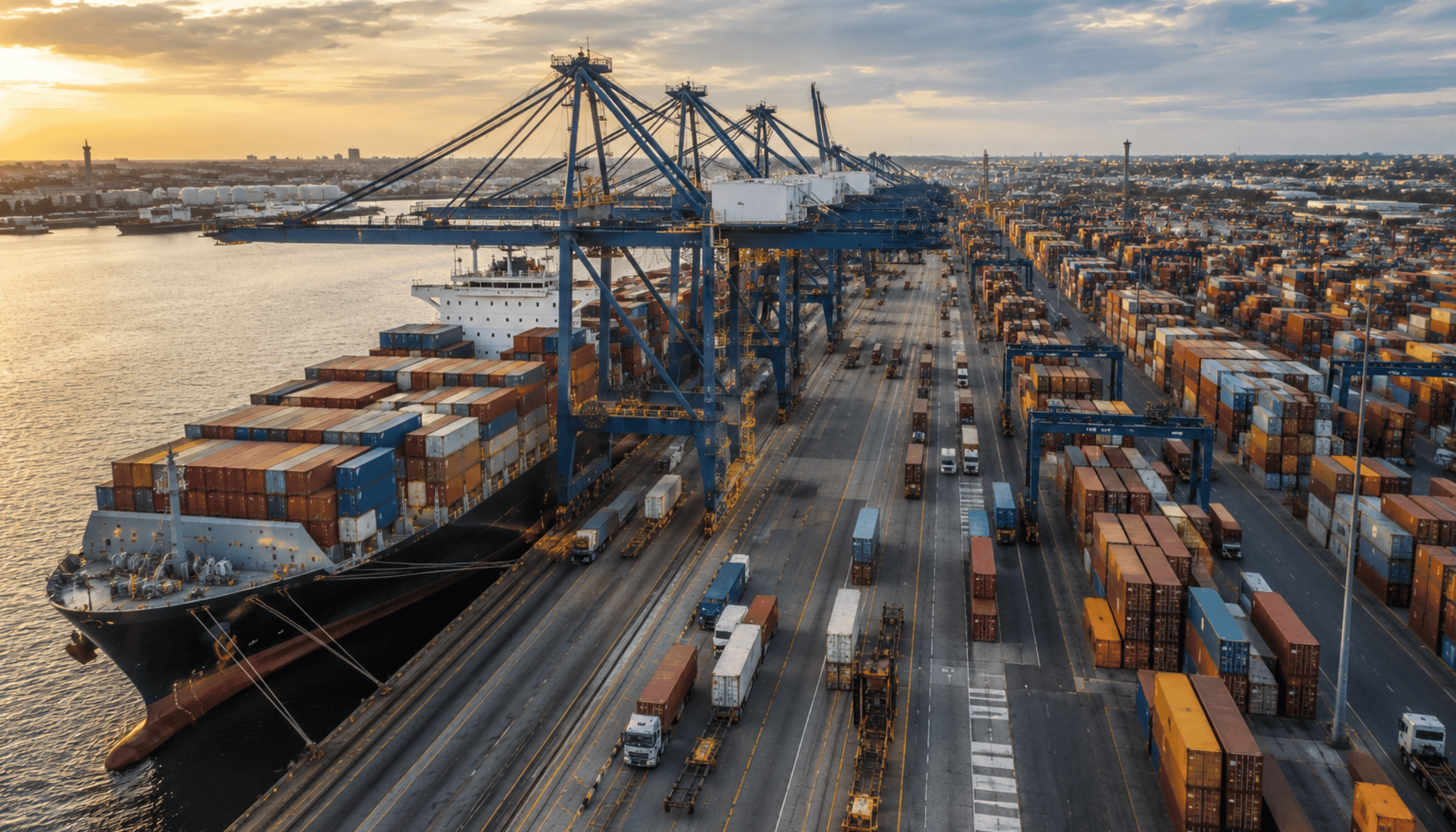
A container arrives – and then what?
Most people envision the same scene when they think of international goods transport: a container ship entering the harbor, cranes unloading containers, and shortly after, the goods arriving at the customer's premises. In reality, however, the most challenging part of the entire transport chain often only begins after arrival at the port.
Many processes lie between the ship and the factory, all of which must interlock perfectly. This is often precisely where it's decided whether delivery deadlines are met – or whether production downtimes and unnecessary additional costs arise.
The port is just an intermediate stop
As soon as a container ship docks in port, a tightly scheduled process begins. The container is unloaded from the ship and initially temporarily stored in the container terminal. However, it doesn't simply wait there to be picked up. Before it can leave the terminal, numerous organizational and legal requirements must be met.
These include:
- Customs clearance
- Shipping line releases
- Import documents
- Terminal processes
- Transport planning
Only when all parties involved work together can the container continue its journey.
Every day counts
Many companies underestimate the costs that can arise when a container remains in port for too long. Shipping lines and terminals often charge additional fees if agreed-upon free times are exceeded. Terms like Demurrage or Detention regularly lead to unpleasant surprises.
Good planning here not only saves time but often several thousand euros.
Now road transport begins
After release, the truck takes over the container. However, this step is also significantly more complex than many assume.
Depending on the goods, factors such as the following must be considered:
- Delivery time slots
- Weight restrictions
- Permits
- Crane unloading
- Forklift capacities
- Access routes
- Recipient's production processes
Particularly for industrial companies, an incorrectly scheduled delivery date can disrupt the entire production process.
Logistics is teamwork
Today, international transport involves much more than just booking a vessel. Behind every container, numerous parties collaborate:
- Shipping companies
- Port operators
- Customs authorities
- Transport companies
- Warehouses
- Dispatchers
- Drivers
- Recipients
The supply chain only operates reliably when all processes are perfectly coordinated.
Why Experience Makes the Difference
While international transports can be booked online today, complex supply chains, however, require experience, foresight, and effective networks. Especially for time-critical shipments or demanding projects, professional planning often determines the success of the entire transport. That's why good logistics doesn't just begin on the ship – it starts much earlier and doesn't end at the port.


Successful logistics doesn't end at the quay. A container reliably reaches its destination only when all processes, from the terminal to final delivery, are seamlessly coordinated. That's precisely what sets professional project logistics apart.