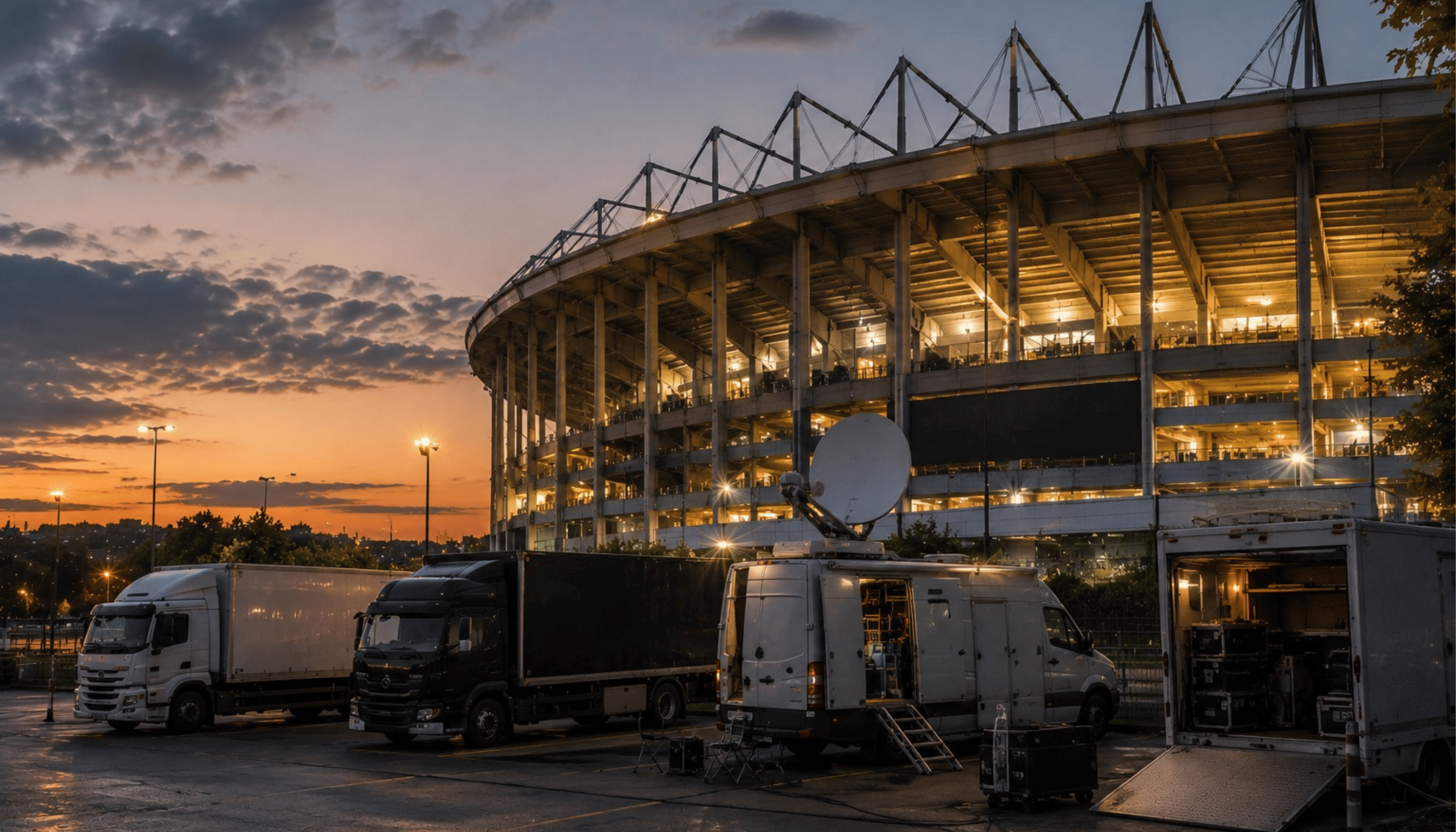
The invisible team behind the World Cup
When millions of people worldwide follow a football World Cup, all eyes are on the players, coaches, and stadiums. Goals, emotions, and great moments take center stage. But behind every kick-off, there's a second team working that hardly anyone notices: logistics. Because before the first ball rolls, countless goods, materials, and technical systems must be in the right place – often precisely on time.
A World Cup begins long before kick-off
For spectators, a World Cup begins with the opening match. For logistics professionals, it often starts years earlier. Stadiums need to be built or modernized. Technology is installed. Security concepts are implemented. Training centers are established. At the same time, supply chains must be set up to function reliably for months. Thousands of individual transports stand behind every match.
What all gets moved at a World Cup
Many first think of jerseys, footballs, and fan merchandise. In reality, the list extends much further. The logistical challenges include, among others:
- TV and broadcast technology
- Camera systems
- LED perimeter boards
- Floodlight technology
- Security installations
- medical equipment
- Catering and provisions
- Merchandise items
- Training materials
- Spare parts for technical systems
In addition, there are the requirements of the teams themselves. National teams don't just travel with players and coaches. Physiotherapy equipment, training materials, analysis systems, and personal gear must also be available at the respective venues in good time.
Logistics under time pressure
A particular challenge is that almost everything is time-critical. While delays in many transports are annoying, they can have direct impacts on event operations during major events. If a technical component fails, a replacement is needed at short notice. If schedules or training locations change, processes must be adapted. Logistics therefore often works with several levels of security:
- Alternative routes
- Reserve warehouses
- additional transport capacity
- Contingency plans
The objective is always the same: Visitors shouldn't notice a thing.
What football and logistics have in common
Interestingly, there are many parallels between successful football and successful logistics. A coach develops game strategies, analyzes risks, and plans alternatives. Logisticians do exactly the same.
In football, teamwork determines success. The same applies to logistics. A supply chain only functions when all parties involved work together seamlessly:
- Customers
- Carriers
- Ports
- Warehouses
- Customs authorities
- Shipping companies
Even a single link can determine success or failure.
The true heroes often remain invisible
When everything runs smoothly at a World Cup, hardly anyone talks about the logistics. And that is precisely its greatest success. Because good logistics is often not recognized by what happens – but by what doesn't go wrong. Spectators experience a perfect event. Players focus on the sport. And behind the scenes, an invisible team ensures that everything is in the right place at the right time.


The best logistics is often the kind that goes unnoticed. Behind every successful World Cup is an invisible team of planners, transporters, and logistics experts, ensuring millions of people can enjoy a seamless event.