
The transformation of dangerous goods logistics — from horse-drawn wagons to a regulated supply chain
The transport of dangerous goods is one of the most heavily regulated areas of logistics today. But the development there was a long time, characterized by technical innovations, growing industrialization and tragic incidents. A look at history shows how highly complex international safety standards have developed from the first improvised transport solutions — and why this evolution is essential for today's supply chains.
Early transport of dangerous goods: unstable barrels and open horse-drawn carts
With the start of industrialization in the 18th and 19th centuries, the transport of chemical substances, fuels and fuel materials became more important. Initially, liquids such as turpentine or petroleum were transported in wooden barrels — often on open horse-drawn carts, without marking, without technical security.
Leaks, fires or explosions were part of everyday work. The infrastructure was rudimentary and knowledge of the risks was limited. In growing port cities in particular, improper storage and transportation regularly led to major fires, which often destroyed entire streets.
Industrialization and initial safety measures
With the massive upswing of the chemical industry in the 19th century, the demand for controlled transport increased. Companies such as BASF or later Standard Oil produced substances whose potential hazards could barely be controlled using traditional methods.
Initial reactions were:
- Improved barrels made of metal instead of wood
- Closed transport trolleys for flammable substances
- Special warehouses with ventilation and fire protection
- First in-house markings
But all these measures were regulated purely nationally or even only within the company — far removed from what would later become international dangerous goods regulations.
Crises as turning points: Accidents that changed the world
Several serious chemical and transport accidents at the beginning of the 20th century led to political demands for uniform standards. Significant turning points include the 1917 Halifax explosion, in which a ship carrying ammunition detonated in port, or the Opau disaster of 1921, caused by large amounts of ammonium nitrate.
Examples of turning points:
- Port disasters due to incorrectly stored chemicals, in which long-unknown reaction chains triggered fires or explosions.
- Tanker accidents with flammable liquids that ignited uncontrollably.
- Rail accidents with hazardous substances that endangered entire communities.
These events made it clear that security must not end at national borders. This marked the beginning of the era of international regulations.
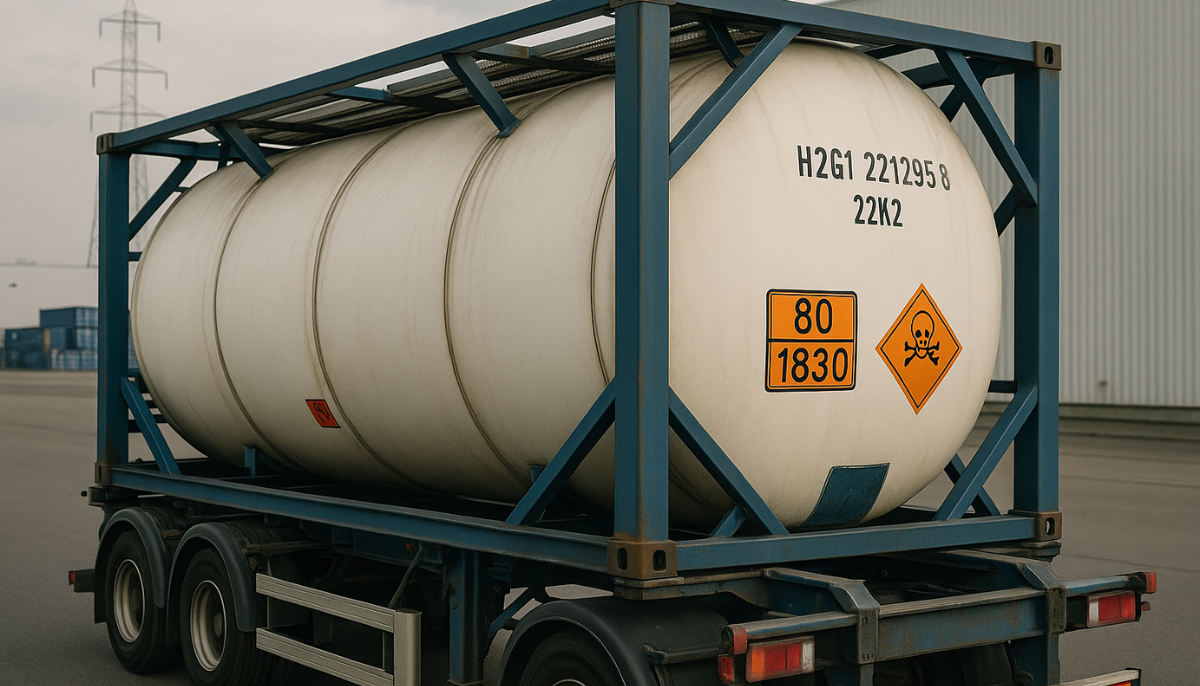
The development of global dangerous goods regulations
After the Second World War, international agreements were increasingly created to make cross-border transport safer. The economic interdependence of Europe and the massive increase in road goods accelerated this process.
Key milestones:
- ADR (European Agreement concerning the International Carriage of Dangerous Goods by Road) — the basis of modern road regulation
- RID (Dangerous goods regulations for rail) — Harmonization for rail transport
- IMDG code (International Maritime Dangerous Goods Code) — standardized sea transport
- ICAO-/IATA-DGR (Dangerous Goods Regulations) — security framework for air freight
They created uniform classifications, UN numbers, packaging standards, documentation requirements and labeling systems. For the first time, the entire transport route was understood as a security chain — from sender to logistics service provider to recipient.
Dangerous goods logistics in the 20th century: Technology assumes responsibility
Starting in the 1960s, a technological revolution began:
- Pressure and temperature monitoring in tanks
- Improved materials (stainless steel, aluminum, special plastics)
- Safety valves and check valves
- Leakage monitoring systems
- Specialized transport containers, e.g. for gases, acids or radioactive materials
This made the transport of dangerous goods more predictable, controllable and significantly safer.
Digitalization and Automation: The New Era of Compliance
Today, companies are facing a new phase of development. While physical standards are mature, digitization is changing the entire information chain.
Modern systems enable:
- Electronic supporting documents, e.g. digitized dangerous goods data
- IoT sensors, which reports real-time data about temperature, pressure, or shock events
- Tracking and geofencingto precisely monitor sensitive substances
- Automated dangerous goods databasesthat minimize errors and increase compliance
This creates a new form of security: not only technical, but also data-driven.


Over two centuries, dangerous goods logistics has developed from improvised transport methods to highly standardized, globally regulated supply chains. This development was shaped by technological advances as well as by painful experiences from accidents and incidents. Modern security today results from the combination of technology, clear processes and digital transparency — and therefore remains a central component of responsible logistics.