
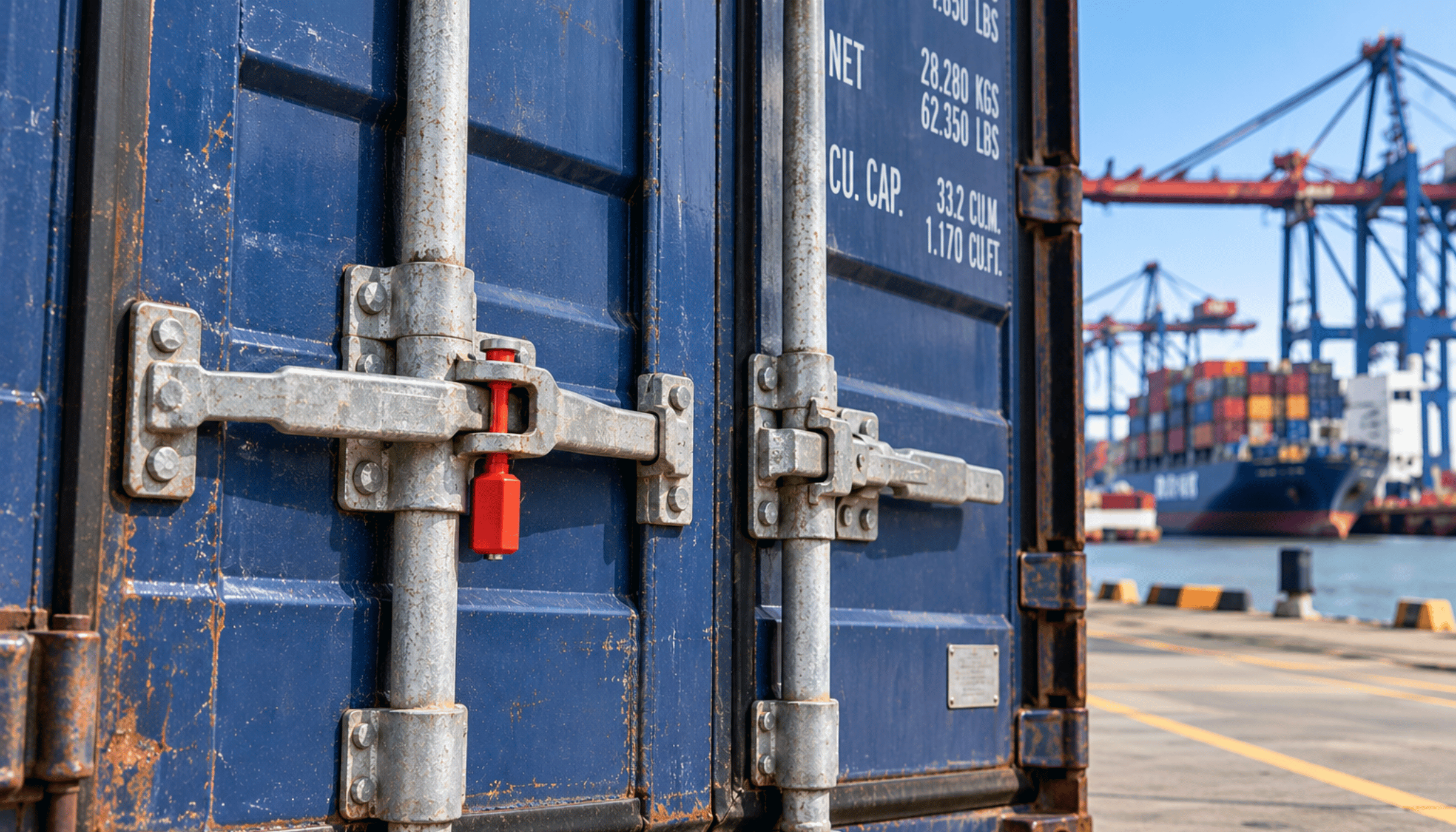
Container seal damaged: What happens now?
A small metal seal protects a container on its journey around the world. But what happens if it is damaged upon arrival or the seal number doesn't match? Millions of containers are transported across the world's oceans every year. To ensure their doors cannot be opened unnoticed during transit, they are secured with special container seals.
However, a damaged or missing seal can raise questions upon arrival—and in the worst case, delay delivery.
What is the purpose of a container seal?
A container seal is attached to the door locking mechanism after loading. Its purpose is to indicate whether the container may have been opened without authorization. So-called high-security seals that meet the requirements of the ISO 17712 standard are particularly common.
Every seal has a unique number. This is recorded in the transport documents and can be verified upon handover. Important: An intact seal is not proof that the goods are complete or undamaged. It serves primarily to detect tampering.
What happens if a seal is damaged?
If a driver, terminal employee, or recipient notices an irregularity, it should be documented immediately.
Typical measures include:
- Check the seal number: Does it match the transport documents?
- Document the condition: Take photos and record any damage.
- Inform the parties involved: Notify the freight forwarder, the client, and, if necessary, the shipping line or customs.
- Coordinate further steps: You should not open or inspect the container on your own if there are official or contractual requirements to follow.
A damaged seal does not automatically mean that goods have been stolen. It may have been removed during an authorized inspection or damaged due to improper handling.
When customs opens the container
Customs authorities may also have containers opened for inspection. In such cases, the original seal may be removed and replaced with a new one after the inspection. It is crucial that the process is clearly documented.
Therefore, a discrepancy in the seal number does not necessarily indicate tampering.
What are the consequences of a damaged seal?
Discrepancies can necessitate additional inspections, which may lead to delays in clearance or delivery. Depending on the situation, additional costs may also be incurred, for example due to demurrage, inspections, or delayed container pickup.
If damage to the goods or a shortage is actually discovered, careful documentation and timely notification of the relevant parties are essential.
How can problems be avoided?
Clean documentation starts with the shipper. The correct seal number should be recorded, the proper closure verified, and the condition checked at all relevant handovers.
For importers, it is also recommended to involve the logistics partner early on if any discrepancies arise.

A container seal is relatively inexpensive, yet it plays a vital role in the international supply chain. If it is damaged or missing, a quick and transparent resolution is essential. In logistics, even minor irregularities can have a major impact on the rest of the transport process. FR8 Logistik GmbH – Moving forward together.