
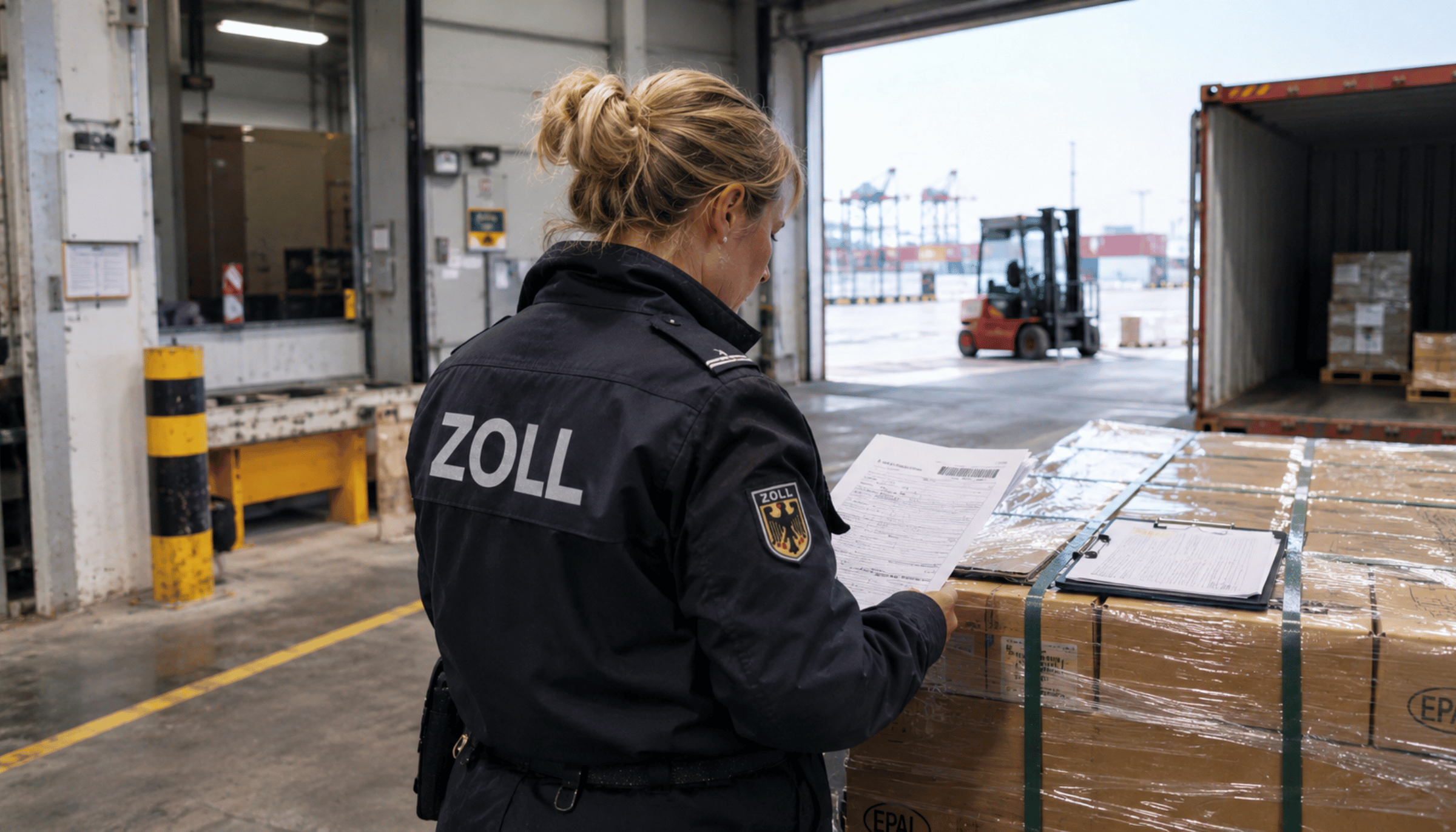
AEO: What is behind the certification?
International supply chains must not only function quickly and reliably, but also meet high security and customs standards. Companies that demonstrate their reliability to customs authorities can obtain Authorized Economic Operator (AEO) status. But what is behind this certification, what advantages does it offer, and why is it important for international logistics?
What does AEO mean?
AEO stands for Authorized Economic Operator. This status is granted by customs authorities and confirms that a company meets specific requirements regarding reliability, organization, and, where applicable, security.
The legal basis is the Union Customs Code (UCC). The goal of the European AEO program is to identify reliable companies within international supply chains and, under certain conditions, provide them with customs facilitation.
This is not a general quality seal for logistics services. AEO status relates to compliance with customs regulations and, depending on the type of authorization, security-related requirements.
What types of AEO certification are there?
There are two main types of authorization, which can also be combined.
AEOC – Customs Simplifications
This authorization is aimed at companies that wish to use specific customs simplifications. It facilitates access to relevant authorizations under legal requirements, though it does not replace them automatically.
AEOC holders can also benefit from a lower frequency of certain customs inspections.
AEOS – Security
This authorization focuses on the security of the international supply chain and corresponding operational protective measures.
AEOS holders can benefit in particular from a lower frequency of security-related inspections. Under certain conditions, prior notification of inspections and other facilitations are also possible.
Combined AEOC/AEOS Authorization
Companies that meet the requirements for both types of authorization can obtain both statuses simultaneously and take advantage of the respective benefits.
The specific facilitations that can be utilized depend significantly on the authorization granted.
What requirements must companies meet?
AEO status is not granted automatically. Companies must prove their reliability to the competent customs authority. To do this, various areas of the company's organization are audited.
Key requirements include:
- Customs compliance: Compliance with customs and tax regulations, as well as the absence of any serious or repeated violations of relevant regulations.
- Transparent business processes: Proper bookkeeping and appropriate systems for documenting and controlling the movement of goods.
- Financial solvency: Proof that the company is able to meet its financial obligations.
- Professional competence: The AEOC authorization requires appropriate practical knowledge or professional qualifications.
- Security standards: For AEOS, appropriate measures must be in place to protect goods, business premises, and international supply chains.
The specific requirements depend on the type of authorization requested. Customs authorities verify these prerequisites before granting approval. The company must also maintain these standards on an ongoing basis thereafter.
What are the benefits of AEO status?
AEO status can offer companies various facilitations in international trade, depending on the specific type of authorization.
Holders of an AEOC authorization can benefit, in particular, from a lower frequency of customs inspections. Furthermore, they can more easily demonstrate compliance with certain requirements for other customs simplifications.
With an AEOS authorization, the focus is on facilitations related to security-based inspections.
For both types of authorization, further benefits are provided under the respective legal requirements, such as priority treatment if a shipment is selected for inspection.
However, AEO status does not mean that goods are generally cleared without inspections. It also does not guarantee faster customs clearance.
Another advantage is its EU-wide recognition: an AEO authorization granted in one member state is valid throughout the entire European Union.
Furthermore, there are mutual recognition agreements with selected third countries. These relate to the security-related AEO component, i.e., AEOS. A purely AEOC authorization is not sufficient for the corresponding benefits.
Why is AEO particularly relevant for freight forwarders?
International freight forwarders coordinate the movement of goods across national borders. This requires the alignment of transport documents, customs declarations, security requirements, and the cooperation of various stakeholders. Incorrect information or missing documents can lead to delays and additional costs.
AEO certification therefore does not just focus on individual customs declarations. It also examines the organizational prerequisites that companies use to control their customs-related processes.
For freight forwarders, this can mean structuring internal processes more systematically, defining responsibilities more clearly, and identifying risks at an early stage. The status can also be a relevant selection criterion for clients, as it demonstrates that a logistics service provider demonstrably meets specific requirements set by customs authorities.
What role does AEO play in warehouse logistics?
The AEO status becomes particularly interesting when international transport is combined with warehousing and customs procedures. One example is the customs warehouse procedure. This allows non-Union goods to be stored under customs supervision without immediately incurring import duties and import VAT, provided the procedure is carried out correctly.
The requirements for documentation, inventory management, and the monitoring of goods movements are correspondingly high. An AEOC authorization can be taken into account when verifying certain prerequisites for other customs authorizations.
However, it is important to make a distinction: An AEO authorization does not replace an independent customs warehouse authorization. In principle, a separate authorization from the customs authorities is required to operate a customs warehouse. While AEO and customs warehousing are different instruments, they can work together effectively as part of a comprehensive customs and logistics strategy.
Trust as a component of international supply chains
With increasing international connectivity, the demands for transparency, security, and traceable goods movements are rising. The AEO status is a tool that allows customs authorities to identify reliable economic operators and provide them with benefits within the scope of legal possibilities.
For companies, certification initially involves a significant organizational effort. At the same time, the intensive examination of their own processes can help to improve workflows and reduce risks.
The FR8 Logistik GmbH has also received AEO certification. This makes the company part of the European Authorized Economic Operator program. The specific customs-related facilitations associated with this depend on the type of authorization granted.

AEO certification confirms that a company meets defined requirements regarding customs compliance, operational organization, and, where applicable, security. While AEOC focuses specifically on customs simplifications, AEOS centers on the security of international supply chains. Depending on the type of authorization, companies can benefit from fewer inspections, priority treatment, and other facilitations. The status is recognized throughout the EU, but it does not replace customs inspections or specific authorizations, such as those for a customs warehouse. For international freight forwarders, AEO is therefore a key component for transparent and reliable logistics processes.